Urban Survival Guide: How to Stay Alive During a City Blackout
Learn how to survive a city blackout. This urban survival guide covers preparation, security, water, food, communication, and decision-making during prolonged power outages.
 P24
P24
Urban Survival Guide: How to Stay Alive During a City Blackout
A large-scale city blackout is not a minor inconvenience. When electricity fails, modern urban life collapses quickly. Elevators stop, water pressure drops, communications fail, and panic spreads faster than information.


Surviving an urban blackout is about preparation, discipline, and timing. Those who act early and think clearly dramatically increase their chances of staying safe.
Step 1: Understand the First 24 Hours
The first day of a blackout is the most dangerous. Traffic lights stop working, emergency services become overloaded, and people rush stores to buy supplies.
Stay where you are if it is safe. Avoid unnecessary movement during the initial chaos. Observe what is happening before making decisions.
Step 2: Secure Your Living Space
Lock doors and windows immediately. Darkness increases crime, especially in densely populated areas. Use furniture to reinforce weak entry points if needed.
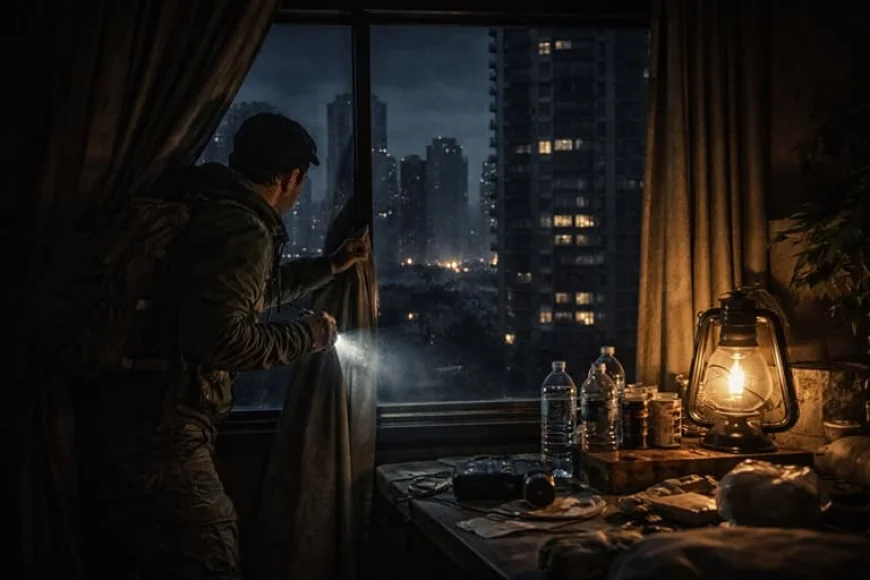
Avoid advertising that your home has supplies. Light visible from windows can attract unwanted attention at night.
Step 3: Manage Water Early
In cities, water supply often depends on electric pumps. Fill bathtubs, containers, and bottles as soon as the blackout starts.
Assume tap water may become unavailable or unsafe within 24–72 hours. Use water sparingly and avoid unnecessary waste.
Step 4: Food Strategy in a Blackout
Eat perishable food first. Refrigerators will keep food cold for only a limited time. After that, rely on shelf-stable foods that require little or no cooking.
Avoid cooking smells that can draw attention in crowded buildings.
Step 5: Light Without Drawing Attention
Use flashlights, headlamps, or candles carefully. Avoid lighting that can be seen from outside at night.
Red or low-intensity light helps preserve night vision and reduces visibility from a distance.
Step 6: Communication and Information
Cell networks may fail or become unreliable. Use radios if available to monitor emergency broadcasts.
Do not rely on rumors. Misinformation spreads quickly during blackouts and leads to poor decisions.
Step 7: Decide Whether to Stay or Leave
Leaving the city too early can be dangerous. Leaving too late can be worse.
If you have a safe destination, a clear route, and enough supplies, evacuation may be an option. Otherwise, sheltering in place is often safer during short-term outages.
Step 8: Mental Discipline
Fear and panic are more dangerous than darkness. Stick to a plan. Conserve energy. Rest whenever possible.
Urban survival is not about strength—it is about control.
Final Thoughts
A city blackout exposes how fragile modern systems truly are. Those who prepare mentally and materially will not just survive—they will stay ahead of the chaos.
Urban survival favors the calm, the quiet, and the prepared.