The Ethics Collapse: Human Testing in Crisis Conditions.
An investigative analysis of how ethical standards erode during biological crises, enabling human experimentation under emergency frameworks, legal gray zones, and moral pressure.
 P24
P24
The Ethics Collapse: Human Testing in Crisis Conditions
Ethics do not collapse all at once. They thin out.


In biological crises, ethical frameworks are rarely abolished. Instead, they are temporarily relaxed, selectively applied, or reinterpreted in the name of urgency. The language remains ethical. The practice quietly changes.
This article examines how extreme conditions create environments where human testing becomes normalized—not through cruelty, but through necessity narratives.
Emergency Ethics Are Not Normal Ethics
Medical ethics are built for stability. Crises break stability.
In emergencies, decision-makers invoke exceptional frameworks:
-
emergency use authorizations
-
compassionate use protocols
-
deferred consent models
-
public health necessity clauses
Each exists for legitimate reasons. Together, they create ethical elasticity.
Elastic systems stretch. Sometimes they do not return.
The Pressure to Act Overrides the Duty to Pause
During outbreaks, inaction is framed as moral failure. This creates a bias toward intervention—even when data is incomplete.
Testing becomes justified not because it is safe, but because doing nothing appears worse. Risk shifts from institutional responsibility to individual subjects.
Consent becomes conditional. Choice becomes constrained.
Who Becomes a Test Subject
Historically and structurally, emergency testing concentrates on:
-
marginalized populations
-
institutionalized individuals
-
frontline workers
-
regions with limited regulatory enforcement
This is not always intentional. It is logistical.
Vulnerability simplifies approval pathways.
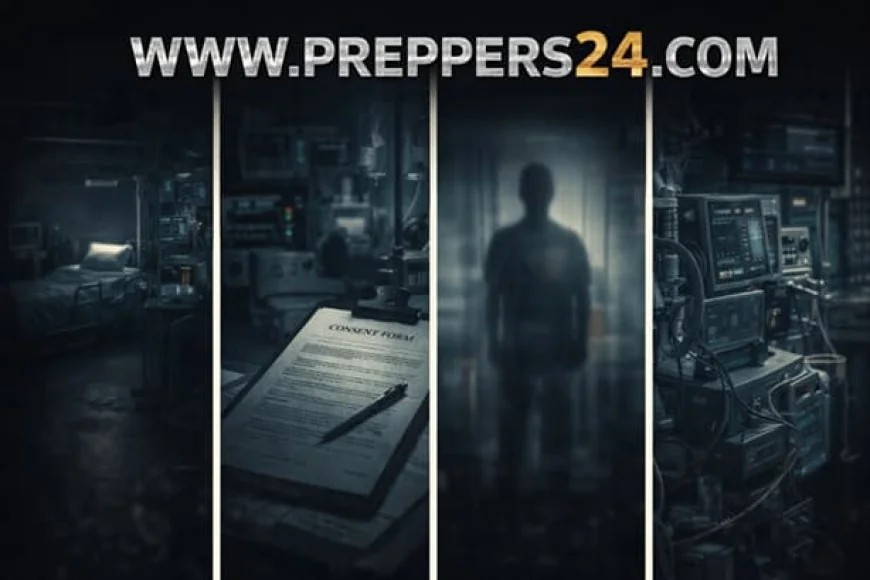
Informed Consent Under Duress
True informed consent requires understanding, freedom, and time. Crises remove all three.
When survival, employment, or access to care depend on participation, consent becomes a technicality rather than a moral safeguard.
Forms are signed. Autonomy erodes.
Historical Precedent Is Not Reassuring
History provides multiple examples where crisis justified unethical testing:
-
wartime medical experiments
-
untreated control groups during epidemics
-
emergency trials without long-term follow-up
Each was later condemned. None were prevented by ethical codes alone.
Ethics failed not because they were absent—but because they were overridden.
Data First, People Second
In crises, data acquisition becomes the priority. Adverse outcomes are reframed as unfortunate but necessary.
Long-term consequences are often unknown, underreported, or reclassified years later. The crisis ends. The data remains. The subjects move on—often without follow-up.
The system advances. Individuals absorb the cost.
Why Accountability Rarely Follows
Post-crisis accountability is difficult because:
-
decisions were legal at the time
-
frameworks were emergency-specific
-
outcomes were mixed rather than catastrophic
Ambiguity protects institutions. Moral responsibility dissolves into process compliance.
Scenario Value: Preparing for Ethical Degradation
Preparedness requires acknowledging that ethical standards are stress-tested in crises—and often fail partially, not completely.
Understanding where and how ethics bend allows individuals and communities to:
-
ask better questions
-
demand clearer consent
-
recognize coercive structures
Awareness does not prevent collapse. It limits damage.
Pro Tip – Outbreak Mindset
In emergencies, read the fine print of urgency. When timelines accelerate and safeguards loosen simultaneously, ethical risk increases exponentially.
Speed is never neutral.
Final Thoughts
Ethical collapse is rarely malicious. It is procedural.
Crises do not turn good people bad. They turn complex systems narrow. When survival becomes the metric, humanity becomes negotiable.
The real danger is not that ethics disappear—but that they appear intact while quietly failing.