Food for Survival: What You Can Safely Eat When Supplies Run Out
A technical survival guide explaining how to source calories safely when conventional food is unavailable, including wild edibles, traps, risk management, and energy economics.
 P24
P24
Food for Survival: What You Can Safely Eat When Supplies Run Out
Hunger rarely kills first—but it destroys judgment fast. In survival, food is less about comfort and more about calorie efficiency versus risk. The goal is not to eat well; it is to eat smart.


This article focuses on what actually works when stores are empty and time matters.
Calories First, Variety Later
The human body can function for weeks with minimal food, but it cannot function without calories. Prioritize energy-dense sources over variety. Fat and carbohydrates matter more than flavor.
Spending six hours collecting leaves that provide 50 calories is a losing strategy. Survival favors return on effort.
Plants: Low Risk, Low Reward
Edible plants are the safest food source if correctly identified. Mistakes are costly. Many toxic plants mimic edible ones.
Focus on plants with wide geographic distribution and simple identification:
-
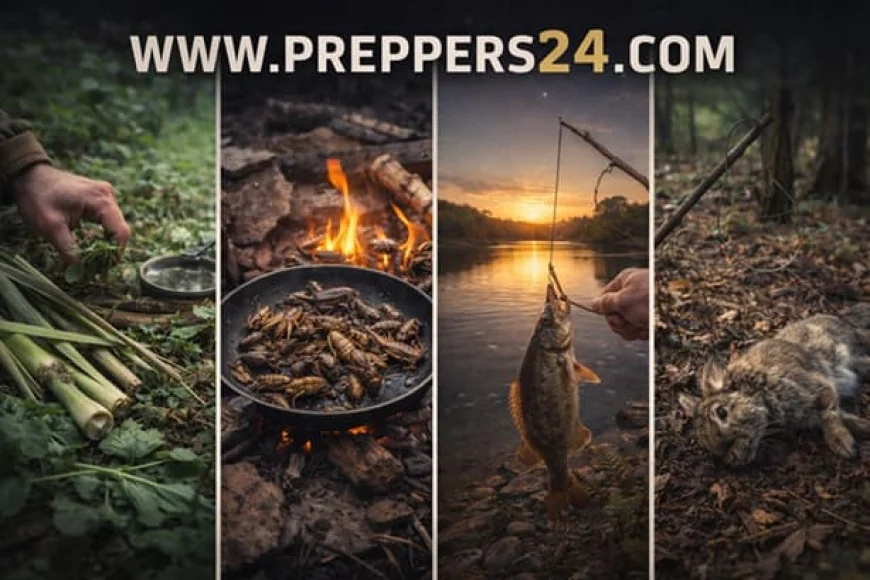
cattail roots
-
dandelion leaves
-
plantain
-
pine inner bark (in moderation)
Avoid mushrooms unless you are trained. No survival guide can make mushroom foraging safe for beginners.
Insects: High Protein, High Efficiency
Insects are one of the most reliable survival foods. They require little energy to collect and offer excellent protein.
Grasshoppers, crickets, ants, and larvae are generally safe when cooked. Avoid brightly colored insects and those with strong odors.
Yes, eating bugs feels strange—until hunger makes it logical.
Small Game and Traps
Trapping is more efficient than hunting. A simple snare works while you rest. Hunting burns calories quickly and often returns nothing.
Small animals like rabbits and squirrels provide lean protein but little fat. Combine with plant or fat sources when possible.
Never rely on a single trap. Redundancy is survival insurance.
Fishing: Energy Positive When Done Right
Fishing offers a strong calorie return when water is accessible. Improvised hooks, lines, or traps can be effective.
Fish fat content varies by species and season. Cold-water fish typically provide more usable energy.
Cooking and Food Safety
Cooking reduces parasites and improves digestibility. Even minimal heat helps. Never eat raw meat or insects unless absolutely unavoidable.
Food poisoning in survival scenarios is catastrophic. Diarrhea equals dehydration, and dehydration equals failure.
Food Storage and Rationing
Eat smaller amounts regularly. Large meals increase metabolic spikes and hunger later. Ration by time, not by emotion.
Hide food smells. In survival, you are not always alone—even when you think you are.
One Uncomfortable Truth
Most people starve with food nearby because they don’t recognize it—or waste energy chasing the wrong kind.
Survival is not about bravery. It is about math.
Pro Tip – Survival Advice
Practice foraging and trapping before you need them. Skill replaces luck. Start learning one edible plant at a time and one simple trap design. Mastery comes from repetition, not reading.
Also, morale matters. A warm meal—even a simple one—can reset decision-making faster than any motivational speech. And yes, the forest does not care if dinner is “Instagram-worthy.”
Final Thoughts
Survival food strategy is about efficiency, safety, and discipline. Choose low-risk sources, protect your energy, and avoid desperation decisions. When calories are scarce, intelligence becomes the most valuable nutrient.