How to Build a Survival Shelter in the Wild: Proven Techniques That Save Lives
Learn how to build a survival shelter in the wild using proven wilderness techniques. This guide explains shelter types, location choice, insulation, and survival priorities to stay alive in extreme conditions.
 P24
P24
How to Build a Survival Shelter in the Wild: Proven Techniques That Save Lives
When people imagine survival in the wilderness, they often think about fire, food, or weapons. In reality, shelter is your first line of defense against death. Exposure kills faster than hunger. Cold, wind, rain, and exhaustion quietly drain the body long before starvation becomes an issue.


A survival shelter does not need to be beautiful. It needs to be functional, fast to build, and adapted to the environment. This guide explains how to build a reliable survival shelter using techniques proven by bushcrafters, search-and-rescue teams, and real survival situations.
Choosing the Right Location
Location determines whether your shelter helps or harms you. A bad spot can turn a solid structure into a trap.
Look for elevated ground to avoid flooding. Stay away from dry riverbeds, animal trails, and dead trees that may fall. Natural windbreaks such as rock formations, dense bushes, or fallen logs provide protection and reduce heat loss.
Avoid hilltops exposed to wind. A slightly lower position on the leeward side of terrain offers better insulation and safety.
Understanding Shelter Priorities
A survival shelter must solve three problems: heat retention, weather protection, and energy conservation.
Your body loses heat through the ground faster than through air. Insulating the floor is as important as building walls. Leaves, pine needles, grass, moss, or bark work well when layered thickly.
The shelter opening should be small. Large entrances invite wind, rain, and cold air. If possible, face the entrance away from prevailing wind.
Types of Survival Shelters
The lean-to shelter is one of the fastest and most reliable designs. A sturdy ridgepole supported by a tree or forked branches forms the frame. Smaller branches lean against it, covered with debris for insulation.
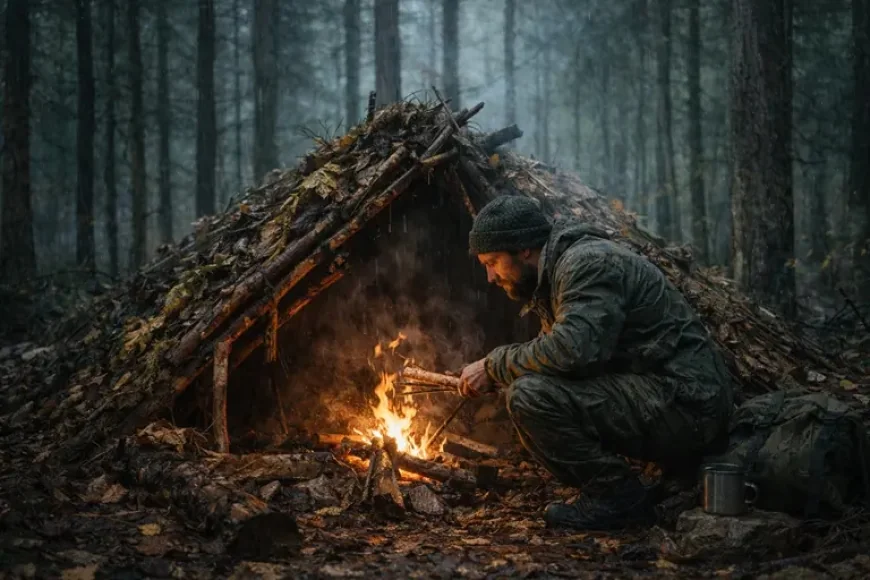
A debris hut provides excellent heat retention. It requires more effort but offers superior protection in cold climates. The structure should be small enough that your body heat warms the interior.
A tarp shelter, if you have equipment, saves time and energy. Even a simple tarp combined with natural materials dramatically improves survival odds.
In snowy environments, a snow trench or snow cave can be warmer than expected due to insulation properties of snow.
Building for Insulation and Durability
Insulation is the difference between discomfort and hypothermia. Pile debris thicker than you think necessary. A rule of thumb is: if light passes through, heat escapes.
Use overlapping layers like shingles to shed rain. Compact materials tightly to prevent wind penetration. Reinforce stress points, especially the roof and entrance.
If time allows, improve the shelter gradually. Survival is often about incremental upgrades, not perfection.
Fire and Shelter Interaction
Fire placement matters. A small fire in front of a lean-to reflects heat inside. Use a reflective wall of logs or stones behind the fire to redirect warmth.
Never build a fire inside an enclosed shelter without ventilation. Carbon monoxide is silent and deadly.
Mental Survival and Shelter
Building a shelter is more than a physical task. It restores a sense of control. Survivors consistently report that once shelter is complete, panic decreases and decision-making improves.
A shelter marks the transition from reaction to strategy.
Final Thoughts
A survival shelter is not a cabin. It is a temporary alliance with nature, designed to keep you alive long enough to recover, signal for help, or move safely.
Mastering shelter-building is mastering time — and in survival, time is life.